I Who Have Read I Who Have Never Known Men
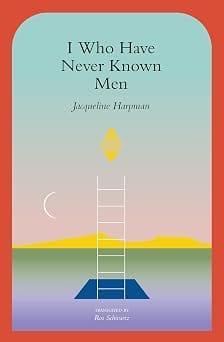
The English Department book club selected this for our 4th quarter read and I unfortunately was not able to make the meet-up for discussion. However, the impassioned opinions that spilled over into our group chat spurred me to finish it.
Going into it, I thought it was going to be a new take on Plato's Allegory of the Cave, which I found intriguing, but then I almost didn't read it at all because our AP Lit teacher, who's recommendations I've come to cherish as much as our last, warned me off of it. We have a shared distaste for the plotless mope-fest that is Never Let Me Go and he told me that this was basically the same thing. Months later, I saw my colleagues arguing via text over the book's quality. Unique and intriguing philosophy or pointless dirge?
Contrarian that I am, I found myself completely in the middle. 5/10 I didn't think it was a struggle to read and I felt it had a plot (if a thin one). I was genuinely riveted by the main character's means of counting to reclaim the concept of time from her captors and the escape that culminated from that section was thrilling. After that, Harpman's narrative asks questions and declines to provide answers. Is that a profound reflection of life's grand mysteries or is she eschewing the novelist's prime responsibility to finish what they started? I'm not sure, but as a writer I'm inclined to say that if all you want to do is show your reader something and get them to ask a questions, perhaps short stories and poetry would be a better medium. The most difficult part of any novel is the ending because the reader seeks resolution for the time they've committed to the work, a destination for the journey they allowed the author to take them on. Many a novel soars or sags in its final act. Harpman passes on even trying.
While I Who Have Never Known Men was certainly, in my opinion, a greater success than Never Let Me Go, with a more intriguing protagonist and beautiful language that transcended translation, it came with an afterward that I felt was a cloying attempt to explain the novel and if a novel needs to be explained afterwards, then it didn't work. The most ready comparison I can make is to Cormac McCarthy's The Road, both in tone and pace. While I would never read The Road again because of the emotional toll it took on me, it didn't need an essay at the end to tell me how to appreciate it.
I have further beef with that essay, and I'm a vegetarian. The essayist openly accepted the novel as science fiction. Um, no. A few idle musings that maybe they aren't on Earth anymore does not make it sci-fi. Nothing about this book was sci-fi. The essayist compared the book to Bradbury (how??) and Dali for it's surrealism. Dali would have added a lot more color. Again, I think The Road would be a better comp title, but also maybe Becky Chambers' To Be Taught if Fortunate, which is actual sci-fi. If you like a female character searching for meaning in the universe on an unresolved quest, and want it to actually be sci-fi, To Be Taught if Fortunate is your next read. To get back to the point about whether a novel needs more than just a mood and premise, but actually needs plot and resolution, To Be Taught if Fortunate it's my least favorite Becky Chambers book because it does exactly what Harpman does in I Who Have Never Known Men. It goes somewhere, but gets nowhere. If you want a meaningless quest for self and purpose in the post-apocalyptic wastes, but want to laugh your way through it, try Service Model by Adrian Tchaikovsky (that book didn't stick the land, but at least it tried, and it wins the award for most British book I've ever read).
The one VERY IMPORTANT take-away I got from the essay at the end, which does not excuse the fact that the novel doesn't stand on it's own, is that the author fled nazi Germany with her family. If you read this as a holocaust novel, that shifts things considerably and provides a schema that illuminates a great many of Harpman's choices. It also tells us not to read this as sci-fi but as allegory of what is left in the world after witnessing such horrors. With that in mind, I don't think you can deny that I Who Have Never Known Men is worth reading, especially as the holocaust dims in the collective conscious and fascist fuck boys swarm our government.
One final recommendation, before I send this off to my English friends, an e-contribution to the book club: Ghoul by George Saunders. If you want surreal, trapped-underground, what-has-the-world-come-to? storytelling that will get in your head, this short story lives rent free in my brain and is somehow very similar to I Who Have Never Known Men while being completely different. All I'll say is: imagine if the underground bunker in which humanity must survive is a theme park full of employees being fully 1984'd as they wait for patrons who never arrive. If you read it, let me know! I'd love to talk about it.